

sixth base of mind : ค้นหาหนังสือธรรมะ หน้า 45 / 79
หน้าหนังสือทั้งหมด
94
The Nature of Suffering and the Pursuit of Happiness
which they try to derive happiness are themselves of the
nature of suffering. The suffering of such people, at root
comes from their search for sense-pleasure and sense-ob-
jects. Even the suffering t
This text discusses how the pursuit of happiness through sense-pleasures results in suffering. It emphasizes that those who do not derive happiness from sense-objects remain unaffected by external mis
98
Exploring Sensual Delights and the Six Sense Organs
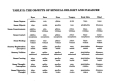
TABLE II: THE OBJECTS OF SENSUAL DELIGHT AND PLEASURE
| | Eyes | Ears | Nose | Tongue | Body Skin
This table presents an intricate overview of the six sense organs in relation to their corresponding objects, consciousness, contact, feelings, registration, volition, craving, thought conception, and
99
Understanding Sensual Attachment and Overcoming Cravings
Our sense organs [aijhattikäyatana] are implicated in the attachment we have to sensual pleasures. If we want to extinguish the craving arising because of attachment to visual temptations, then we hav
Our sense organs play a crucial role in our attachment to sensual pleasures. To overcome this attachment, we must target both the senses and their corresponding objects. Each sense - sight, sound, sme
102
Overcoming Craving through the Noble Eightfold Path
[phottabhba-vitaka] and thought-conception concerning of the mental objects [dhamma-vitaka].
Moreover, the discursive thought [vicāra] concerning our sensual objects arising from the aforementioned se
This text explores how discursive thoughts about sensory objects lead to attachment and suffering. Each of the six senses contributes to craving, necessitating practitioners to overcome these attachme
111
Understanding the Dhammakāya in Insight Meditation
called the ‘Coarse Dhammakāya Arahant’ or the ‘Subtle Dhammakāya Arahant’ — the latter two being the bodies of enlightenment of the arahant. The Dhammakāyas are all transcendental [lokuttara] in natur
This text delves into the concept of Dhammakāya Arahant, distinguishing between the Coarse and Subtle Dhammakāya. It explains that these bodies are transcendental and consist of pure aggregates that a
116
Understanding Nirvana: The Realm Beyond Existence
same happiness to us as if we were really in āyatanā nibbāna — but we are still ‘alive’ in our human body.
2. Nirvana without residual aggregates (Anupādisesa Nirvana [Nibbāna]) is the Nirvana that is
This text delves into the concepts of Āyatanā Nibbāna and Anupādisesa Nibbāna, explaining that Nirvana exists beyond the physical realm and is not bound by worldly elements. It describes Nirvana as a
121
The Noble Eightfold Path: Ethical Conduct and Mindfulness
Stealing [adinnādāna]: Taking that which is not given;
Committing adultery [kāmesumicchācarā]: abstaining from sexual relations outside marriage.
5. Right Livelihood
The Lord Buddha taught his monks
This text discusses key principles of the Noble Eightfold Path, focusing on ethical conduct such as Right Speech, Right Action which includes abstaining from stealing and committing adultery, and Righ
134
The Importance of Meditation in Buddhism
Meditation is the focussing of the mind on a single object and abiding in a single mood without distraction or restlessness, or being caught up in external influences on mood. Meditation is thus of gr
Meditation is central to Buddhist practice, allowing individuals to focus the mind on a single object, leading to the cultivation of virtues and deeper levels of awareness. The attainment of the five
145
Understanding the Eightfold Path: Right Mindfulness and Right Concentration
fort: doing of evils not yet done, maintainance of evils already done, not doing virtues not yet done and abandoning virtues already mastered.
As for Right Mindfulness, he would immediately and defini
This excerpt explores the significance of the Eightfold Path, specifically focusing on Right Mindfulness and Right Concentration. It emphasizes understanding the aggregates of existence as they relate
170
The Foundations of Right Effort in Spiritual Practice
he realized the risk of continuing to live near the haunts of men so he fled secretly from the flock at night to the Himavanta forest, finding safe cave as a home on a golden hill in Dandika. Every mo
This text delves into the concept of Right Effort in the context of spirituality, illustrated through the practice of a hermit who maintained his serene life in Himavanta forest for 700 years, while a
176
Understanding Right Concentration in Mindfulness
the emperor. Similarly, discretional mindfulness monitors
all mental phenomena — if it is unwholesome, then to try to
reduce it. If it is wholesome, to give it the chance to grow.
8. Right Concentrat
This section discusses the concept of Right Concentration in mindfulness, highlighting its two essential characteristics: supporting role and focusing role. It draws analogies to illustrate how concen
181
The Path to Liberation in Buddhism
the defilements from their minds and to attain liberation.
The conclusion we can draw from seeing Koṇḍañña at-
tain stream-entry after a relatively short teaching (and also
from seeing the rebirth of
The text discusses how Koṇḍañña attained stream-entry through accumulated wholesome deeds from past lives, emphasizing the importance of good deeds in the present. It highlights that contact with the
183
Awakening Through Practice: The Path to Sainthood
The Perfections which he had built up for himself from the past, together with the good deeds of his present lifetime added up to a level of Perfections superior to those of his contemporary monks. Co
In the narrative of Koṇḍañña's journey, we see how individual Perfections and good deeds lead to his early awakening, inspiring both him and his companions to deeper faith and dedication in their prac
222
Understanding Dhammakāya and Defilements in Meditation
deep meditation 114
defilement 122: different, for each
inner body 135; of Angelic Body 135;
of Dhammakāya Anāgāmi 137; of
Dhammakāya Gotrabhu 136; of
Dhammakāya Sakidāgāmi 136,
137; of Dhammakāya Sot
The text provides an in-depth examination of the Dhammakāya concept, explaining various levels such as Dhammakāya Anāgāmi, Gotrabhu, and Sakidāgāmi. It discusses the nature of defilements and how arah
229
Exploring Key Buddhist Concepts and Practices
Phramonkothpumuni: emphasises practice 12; explains "dhammikāya" and "āyatannibbāna" 102; founder of Dhammakāya Tradition 102; respected commentarian 102-3; sixteen tasks of 207 physical deeds, wholes
This text delves into various aspects of Buddhist philosophy, focusing on the teachings and practices associated with the Dhammakāya Tradition founded by Phra Mongkothpumuni. It highlights the signifi
35
ไม่พบเนื้อหา
4
Early Studies in Meditation
"Stopping the mind is the essence — it is both
the path and the fruit of Nirvana. Even those
who practise charity and keep the Precepts are
not as close to Nirva
ไม่สามารถสรุปเนื้อหาได้เนื่องจากไม่มีข้อมูลที่มีอยู่
39
OCR Text Analysis
his life. He knew that when the mind is agitated, it cannot find peace. So, he rose to a new level of tolerance and began to let go of the pain, detaching himself from the suffering. Suddenly his mind
OCR, or Optical Character Recognition, is a technology used to convert different types of documents, such as scanned paper documents, PDF files, or images taken by a digital camera, into editable and
61
No content provided
was why he had to set up a refectory for the meditators and scripture students — the first of its kind in Thailand. Luang Phaw started to provide for the monastic community in 1916 and continued to do
No summary available.
113
Untitled
He paused and gazed at the ordinand with his penetrating eyes as though ascertaining whether he was concentrating on what he taught. Satisfied, he continued to preach on the qualities of the wisdom, p
No content available for summary.
137
The Art of Mindful Living
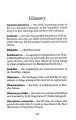
Glossary
Anusāvanācāriya — the junior examining monk of the two monastic examiners at the ordination whose duty is to give teachings and advice to the ordinand.
Arahant — one who has purified themse
In a fast-paced world, the practice of mindfulness offers a sanctuary for the mind. This guide explores the significance of being present, the science behind mindfulness, and practical techniques to i